MLK: Marching Footsteps
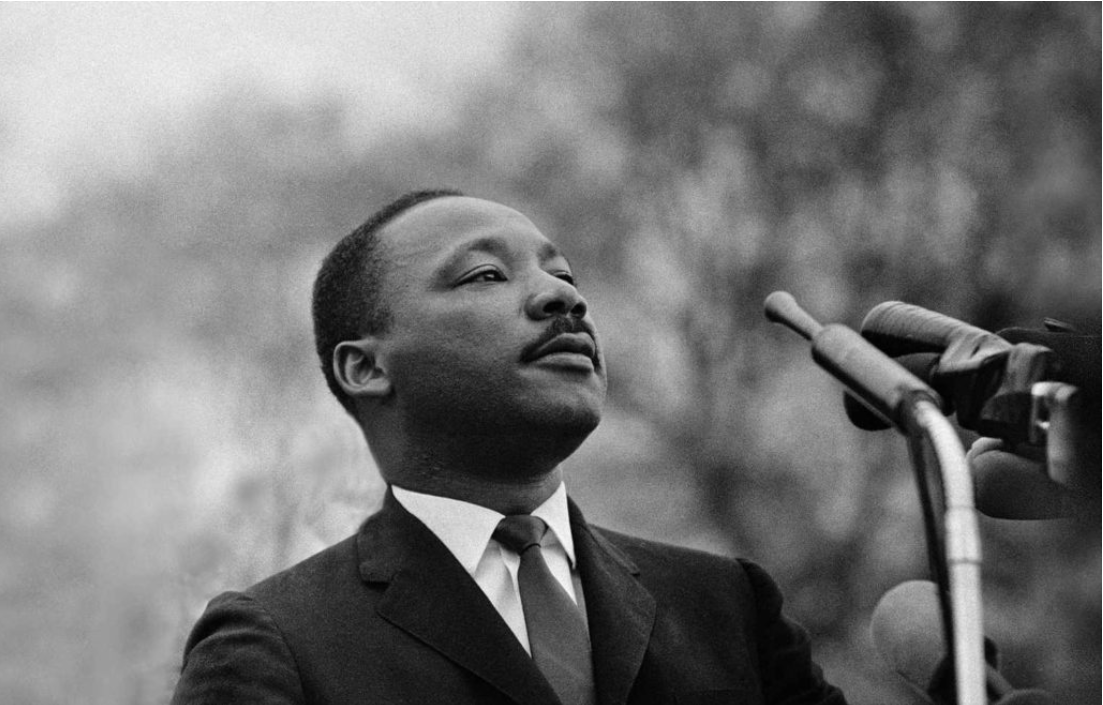
MLK:
Marching Footsteps
Equality, Unity, and Collective Action
Students will learn about Martin Luther King Jr.'s peaceful marches and their significance in the Civil Rights Movement. They will understand the power of collective action by creating a visual representation of a "marching path" made from their own decorated footprints.
Materials
Large sheets of white paper or a roll of butcher paper
Markers, crayons, and colored pencils
Scissors, Glue or tape
Pre-drawn templates of footprints and poster boards
Example phrases or prompts (e.g., "I dream of..." or "My message is...")
Preparation:
Create a simple slideshow or printouts with images of Martin Luther King Jr., civil rights marches, and key slogans (e.g., "Equal Rights for All," "Justice for Everyone").
Prepare a short story or speech to explain MLK's peaceful marches in simple terms.
Lesson Outline
Introduction (10minutes):
1. Tell students about Martin Luther King Jr. and how he led peaceful marches during the Civil Rights Movement to fight against unfair treatment of Black people and other minorities.
2. Discuss Question:
- "Have you ever seen people work together to help someone or make something better? What did they do?"
- "Why do you think Dr. King chose to march instead of fight?"Hands-On Activity (30 minutes): Marching Footsteps
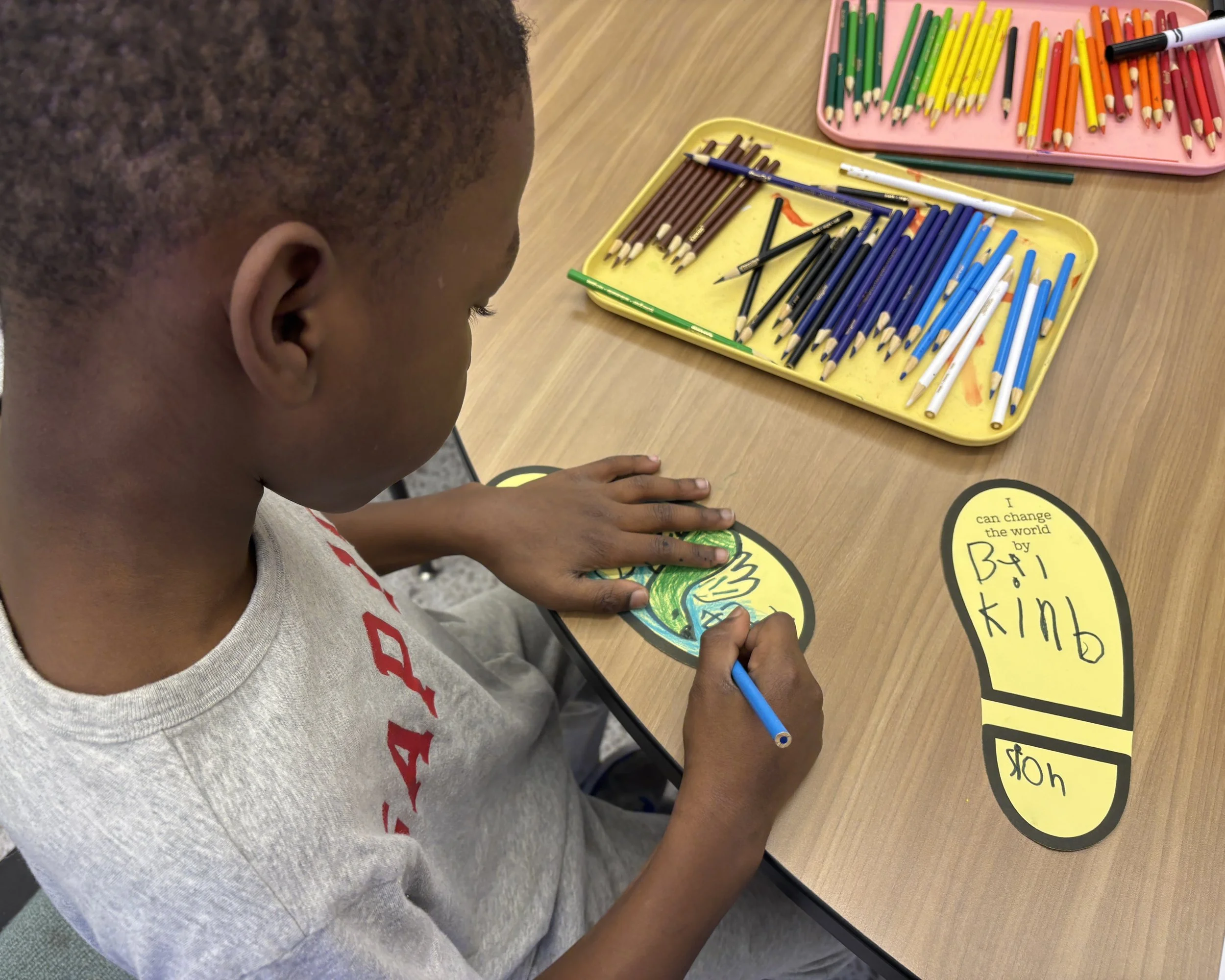
1. Give each student a pre-drawn footprint template.
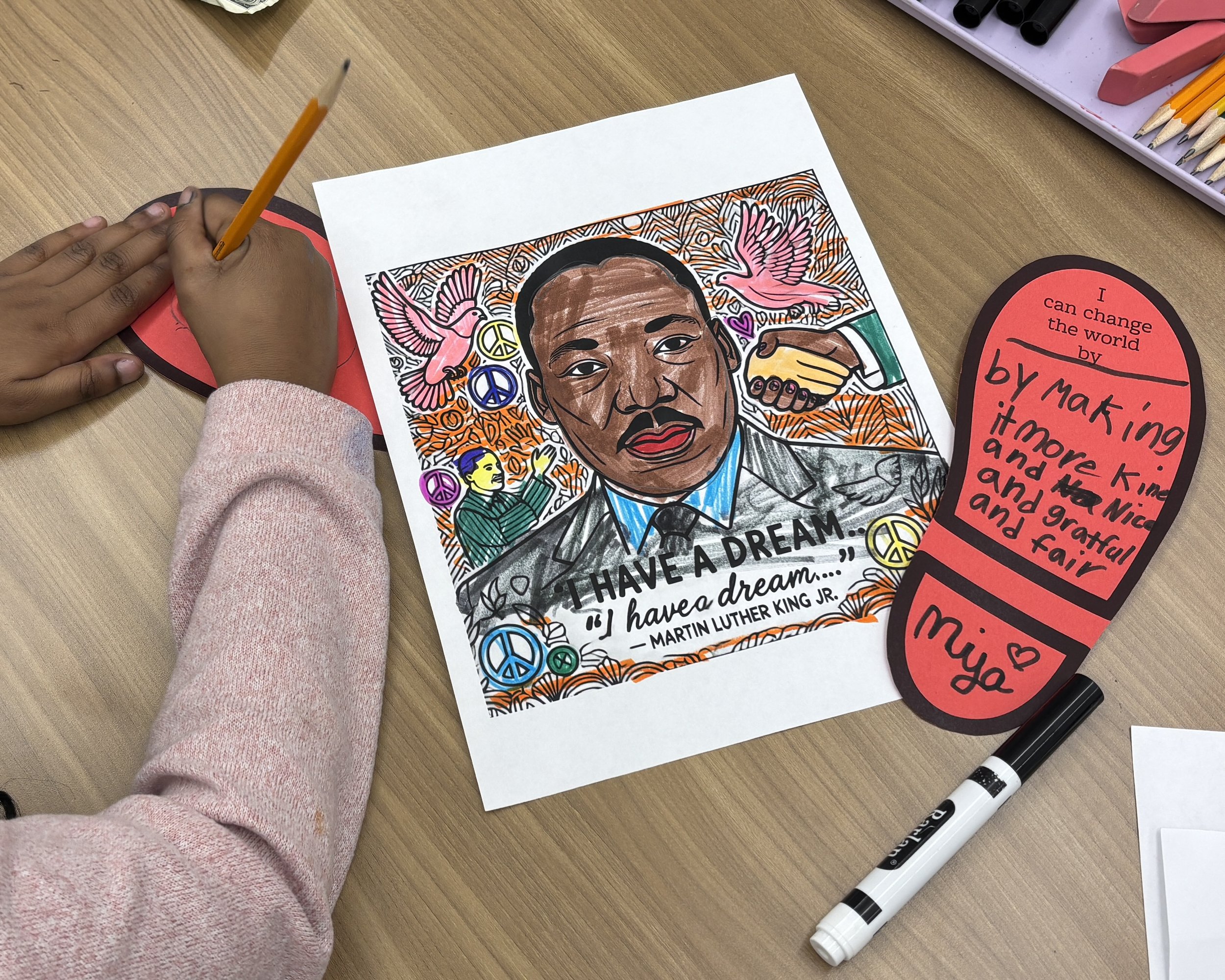
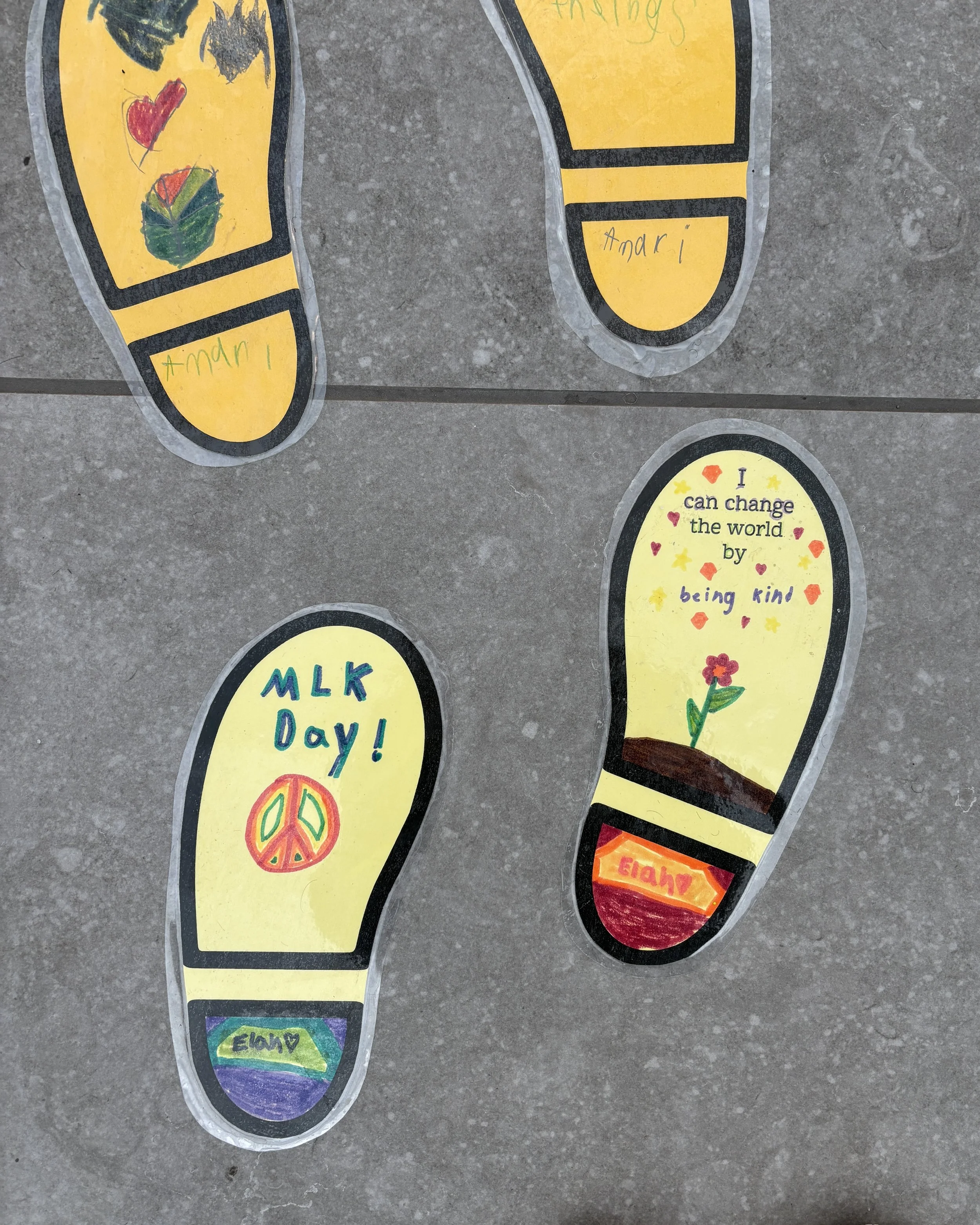
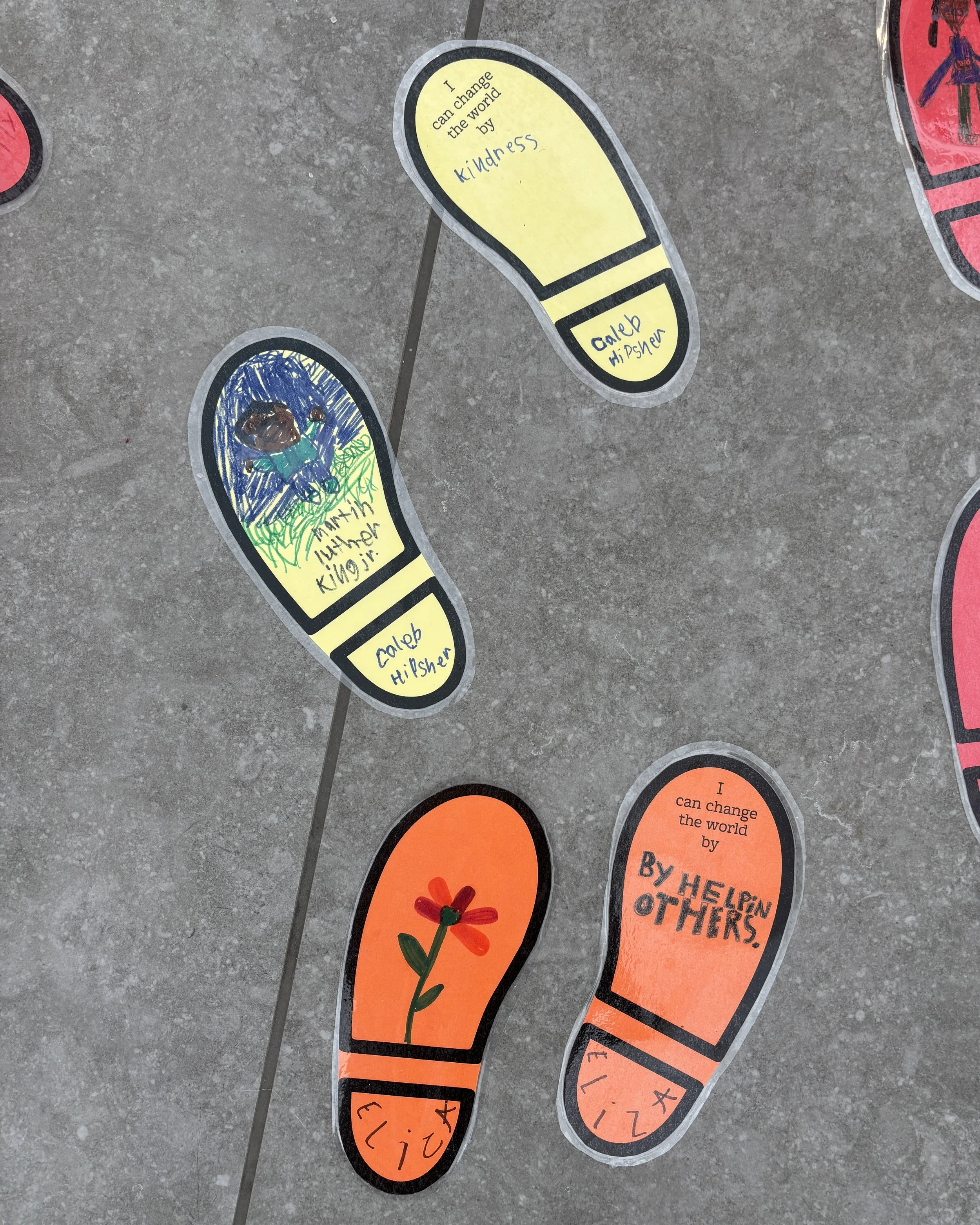
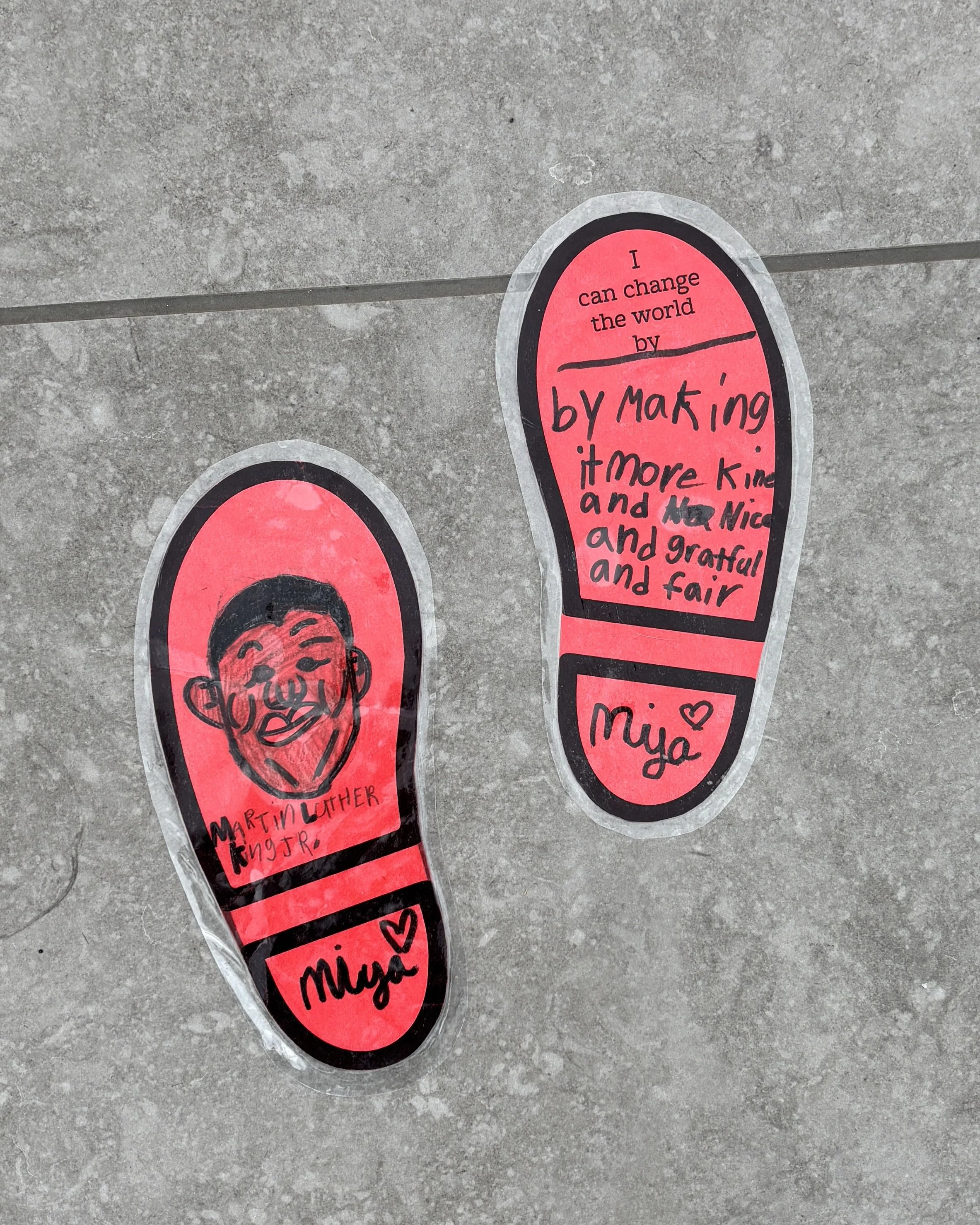
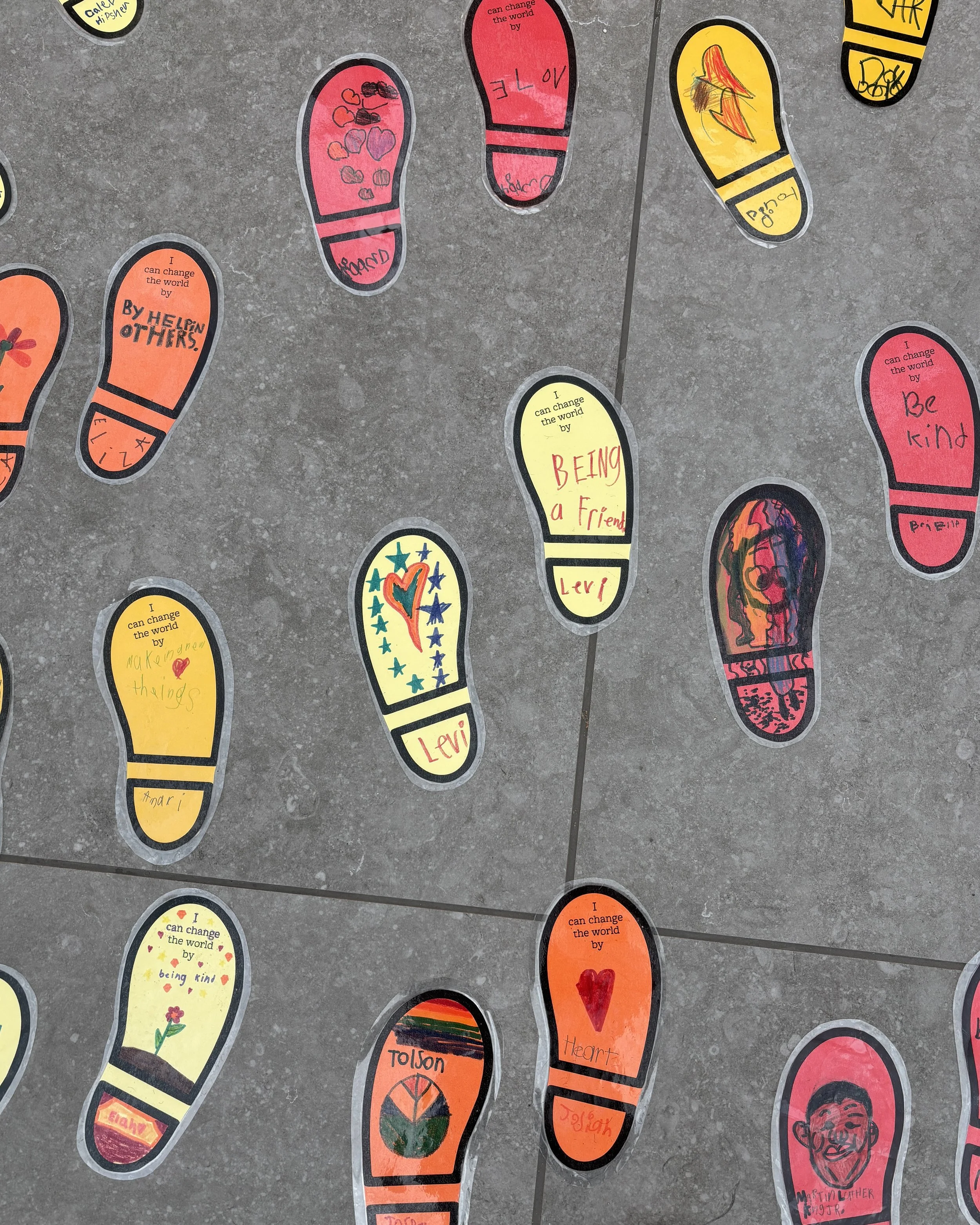
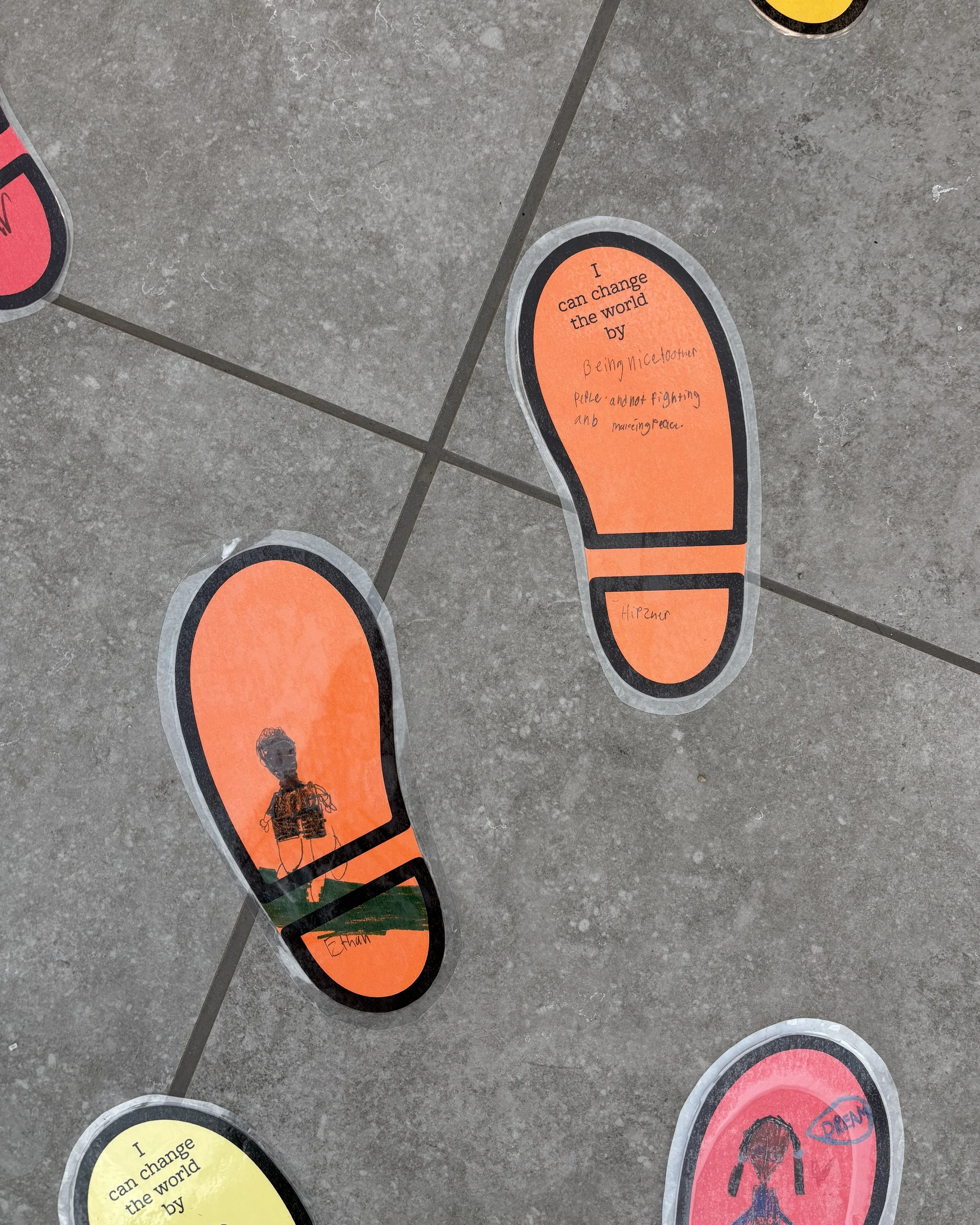
2. Add a message: Ask students to write or draw something on their footprint that represents "equality", "kindness", "peace" and etc,.
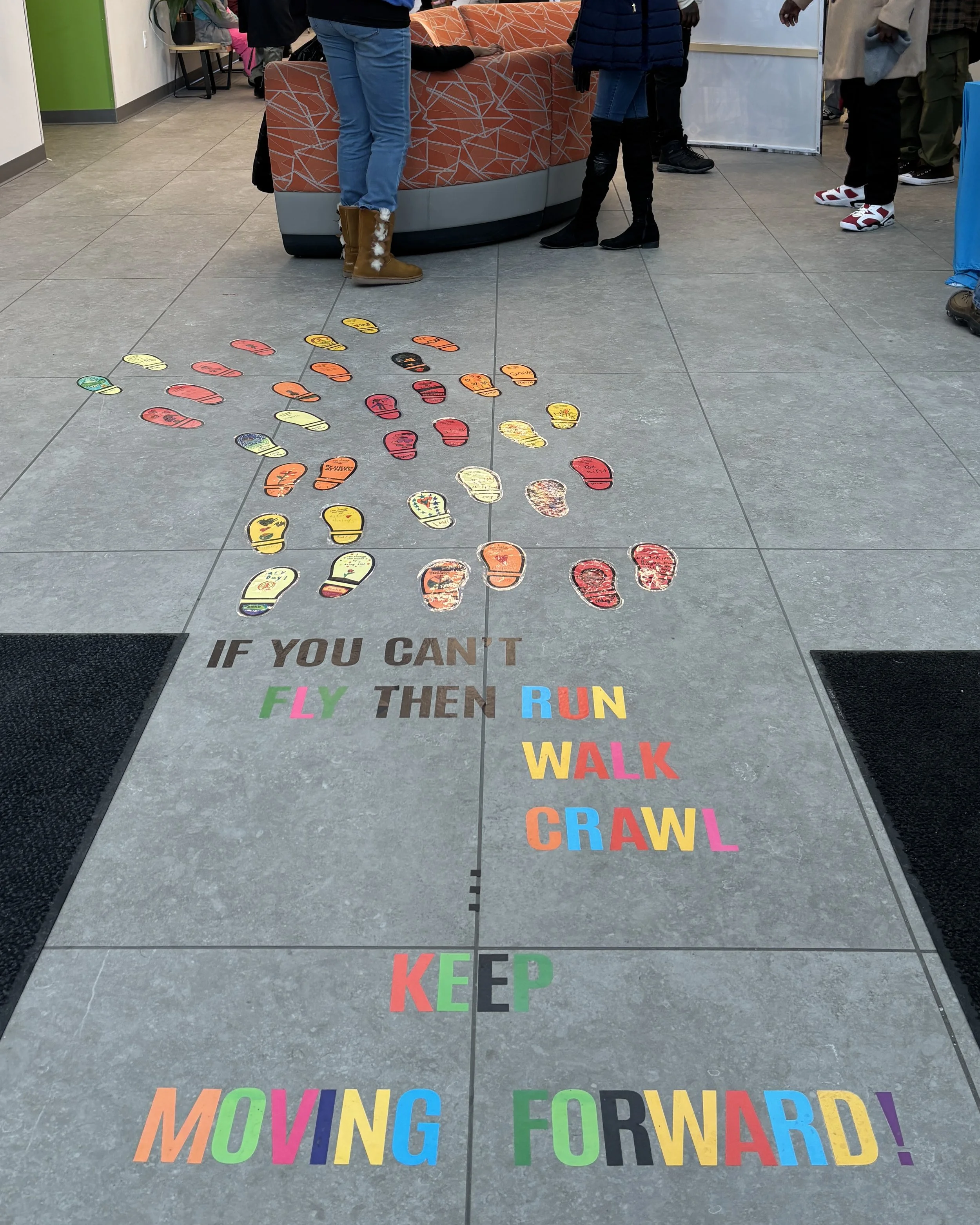
3. Create the path: Once all the footprints are ready, gather as a group to tape or glue them in a long line on a banner, hallway wall, or classroom floor. Arrange the footprints in a way that resembles a march.
Sharing and Appreciation (10 minutes):
1. Students appreciate the completed path together, allowing them to feel that their individual pieces are part of a greater whole.
2.Reflection Questions:
- "What do you notice about our path? How does it feel to see everyone’s footprints together?"
- “Why is it important that everyone’s piece is part of the whole path?”
- "How do you think Dr. King felt when so many people marched with him?"
Even small steps can lead to big changes when we work together.
Each footprint in our march is important, just like every person’s voice matters.