Materials
Oil pastels
Paper
Pencils and erasers
Cotton swabs, tissues, or fingers for blending
Wet wipes or paper towels
Preparation:
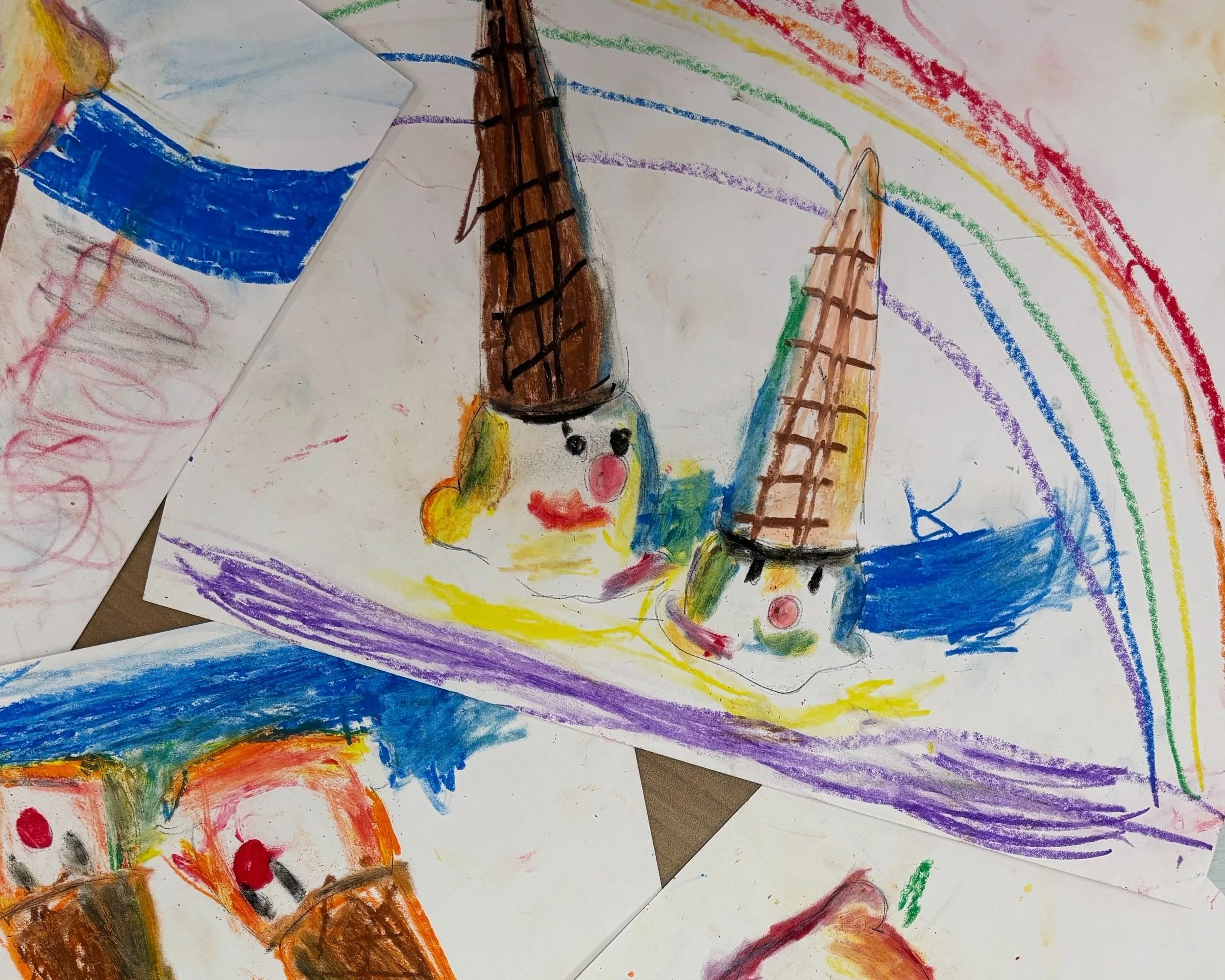
Prepare a demonstration piece showing a jelly cone with shadows and highlights.
Lightly pre-sketch jelly cone outlines on student papers to help them focus on coloring, blending, and shadow placement.
Lesson Outline
Introduction (10minutes):
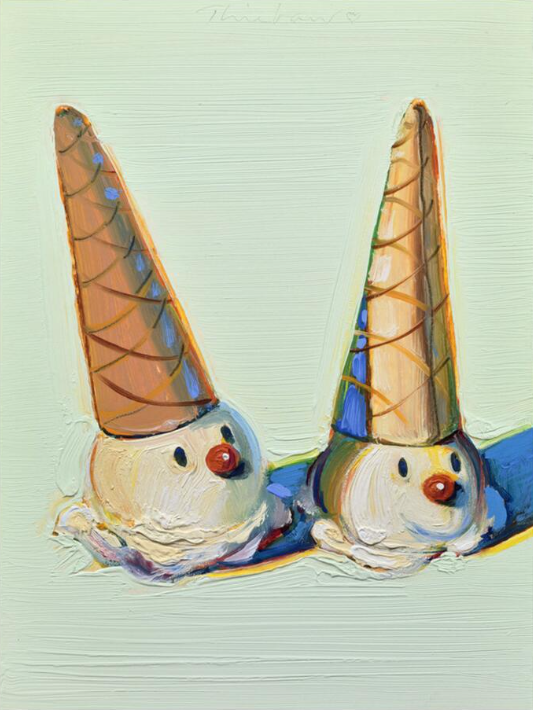
1. Introduce Thiebaud as an artist known for painting desserts in bold colors and playful compositions.
2. Discuss Question:
- “How do you think he made the dessert look 3D?”
- “What colors did he use for shadows?
- “How is this different from using black or gray?”Demonstration (10minutes):
1. Use the artwork as an example to show how to identify the light source
2. Show how to blend oil pastels to create gradient
3. Identify unusual colors for shadows (purple, blue, greens, not black)
Hands-On Activity (30 minutes): Marching Footsteps
1. Students color their pre-sketched jelly cones
2. Blend using fingers or tools, refine shapes, and decorate background if time allows
Sharing and Appreciation (10 minutes):
1. Students appreciate the completed path together, allowing them to feel that their individual pieces are part of a greater whole.
2.Reflection Questions:
- "What was your favorite part about drawing your jelly cone?”
- “What colors did you use for your shadow? Why did you pick them?”
- “What’s the name of your jelly cone and what flavor is it?”